Bareboat vs. Crewed Charter in Croatia
Compare bareboat, skippered and crewed charters in Croatia: who sails, cooks and pays for what, and which option fits your group.
Choosing between a bareboat and a crewed charter in Croatia starts with one question: who runs the yacht? On a bareboat, your group does. On a skippered or crewed charter, a professional captain takes the helm.
Bareboat means you rent the yacht without a hired crew. This guide compares bareboat, skippered, and crewed charters, explains how their costs differ, and helps you choose the right setup for your yacht charter in Croatia.
Key takeaways
- Bareboat: your group sails, anchors, shops, cooks, and cleans. Someone aboard needs a recognized skipper certificate.
- Skippered: a hired captain runs the yacht. Your group handles meals and housekeeping unless you also hire a steward or stewardess to prepare breakfast and a light lunch and provide agreed cleaning services.
- Crewed: the captain and crew sail, cook, clean, and host. Nobody in your group needs a license.
- Compare four budget categories: the charter rate, running expenses, optional extras, and a refundable deposit. Confirm applicable taxes and keep the deposit separate from holiday spending.
- Best fit: bareboat suits experienced sailors who enjoy managing the yacht. Skippered and crewed options reduce onboard responsibilities to different degrees.
Bareboat, skippered, and crewed: a comparison
The three options differ in who does the work, who needs a license, and how you pay.
The table below shows the main differences. However, the exact terms always depend on the yacht and the contract you sign.
| Compare | Bareboat | Skippered | Crewed |
|---|---|---|---|
| Who runs the yacht | Your group | Hired skipper | Professional captain |
| Who cooks and cleans | Your group | Your group, or an optional steward or stewardess for breakfast, a light lunch, and agreed cleaning | Chef or cook/steward and other crew, depending on the yacht and agreed service |
| License needed | Yes, for the person at the helm | No | No |
| Crew cabin | Not needed | Accommodation for the skipper and, if hired, the steward or stewardess; confirm the guest cabins available | Confirm crew sleeping arrangements and guest cabins |
| Embarkation | Fixed check-in and check-out times set by the base | Same as bareboat | Boarding and disembarkation times set by the charter agreement |
| Route | Usually round trip; ask about one-way availability, permitted areas and extra fees | Usually round trip, planned with the skipper; confirm any one-way arrangement | Round trip or one-way, subject to availability and agreement |
| How you pay | Charter rate plus expenses as you go | Charter rate plus skipper fee, optional steward or stewardess fee, and expenses | Charter rate plus agreed expenses and applicable taxes; APA, meal packages or other arrangements vary by yacht |
| Deposit | Refundable security deposit, often with an optional damage waiver | Depends on the operator | Set by the yacht’s contract |
What is a bareboat charter in Croatia?
A bareboat charter means you rent the yacht without crew and sail it yourselves. The person listed as the Charterer assumes legal responsibility for the yacht, guests, and itinerary.
That role covers far more than steering. For example, the skipper plans each day around the weather, including the afternoon Maestral breeze. The skipper also books marinas, sets the anchor, and brings the yacht back on time.
The charter base sets the permitted cruising area and return arrangements. Many bareboat charters start and finish at the same marina. If you want a one-way itinerary, such as Split to Dubrovnik, ask about availability and any additional fees before booking.
National parks add their own rules. For example, Mljet National Park’s rules for yachtsmen require a vessel entry ticket priced by size. They also limit anchoring to named bays at Polače and Pomena.
How do provisioning and cooking work on a bareboat?
On a bareboat, your group plans, buys, and cooks every meal.
Groups usually shop at a supermarket near the base before departure. Then they resupply at island markets along the way.
Meanwhile, somebody has to cook in a compact galley and clean up afterward. Therefore, groups often mix meals on board with dinners ashore. Towns such as Hvar, Vis and Korčula make that easy, but popular konobas fill up quickly in July and August.
Water, gas and ice need planning as well. In other words, provisioning is part of the holiday’s workload, not a side task.
Searching for the ideal yacht?
Explore more yachts or let us recommend the perfect fit.
What changes when you hire a skipper?
A skipper takes over the sailing, so nobody in your group needs a license.
The skipper handles navigation, anchoring, marina maneuvers, and weather decisions. In addition, a local skipper knows which bays offer shelter when the wind shifts.
The skipper must hold a certificate recognized by Croatia. Croatia’s recognized certificate table is based on the Ordinance on Boats, Small Craft and Yachts. The skipper’s primary role is to operate the yacht, rather than to prepare meals or clean cabins. If you hire only a skipper, your group handles those tasks. Some skippered charters also offer a steward or stewardess who prepares breakfast and a light lunch and provides agreed cleaning services. Confirm the meal service, provisioning arrangements, and cleaning duties before booking.
The skipper lives on board, as does a steward or stewardess if you hire one. Confirm their sleeping arrangements and how many guest cabins remain available. Crew fees and meals also affect your budget, so ask for a quote that includes both.
When does a skippered charter make sense?
It suits groups who enjoy doing things themselves but lack a license or prefer not to have the sailing responsibilities. Sailors new to Croatian waters often choose one, too.
A couple might prefer to prepare breakfast themselves and dine ashore each evening. A family might add a steward or stewardess for breakfast, a light lunch, and cleaning while relying on the skipper for navigation and local knowledge. This offers more support without the service level of a crewed yacht.
What does a crewed charter include?
A crewed charter includes the yacht, a professional captain, and a crew who run the yacht for the whole week for you.
If you want to charter a yacht for a vacation in Croatia and simply relax, this is the option for you. The crew sails, cooks, cleans, and plans the route with you. Above all, your group simply enjoys the holiday.
Inclusions vary by yacht and contract. Depending on the agreed terms, the charter fee may cover:
- The yacht and all its equipment in working order
- Wages, uniforms and food for the crew
- Insurance for the yacht and crew
- Laundry of the ship’s linen and basic consumables
Fuel, food, drinks, marina charges and water-sports fuel may be additional expenses. Some yachts fund agreed expenses through an Advance Provisioning Allowance (APA); others use meal packages, included allowances or separate charges. Confirm the inclusions and expense arrangements in your quote and contract.
What about privacy? A good crew stays in the background and works around your schedule. Still, you share the yacht with them, so ask about crew size and layout if privacy matters. Crew quarters usually sit apart from the guest cabins.
Crewed yachts may offer round-trip or one-way routes, subject to availability and operating arrangements. Boarding and disembarkation times vary by yacht and turnaround: noon, 3 p.m., 5 p.m., or another agreed time may apply. Confirm both times and ports in the charter agreement before arranging travel. Our Croatia yacht boarding guide explains the arrival process for crewed charters.
What do the chef and interior crew do on board?
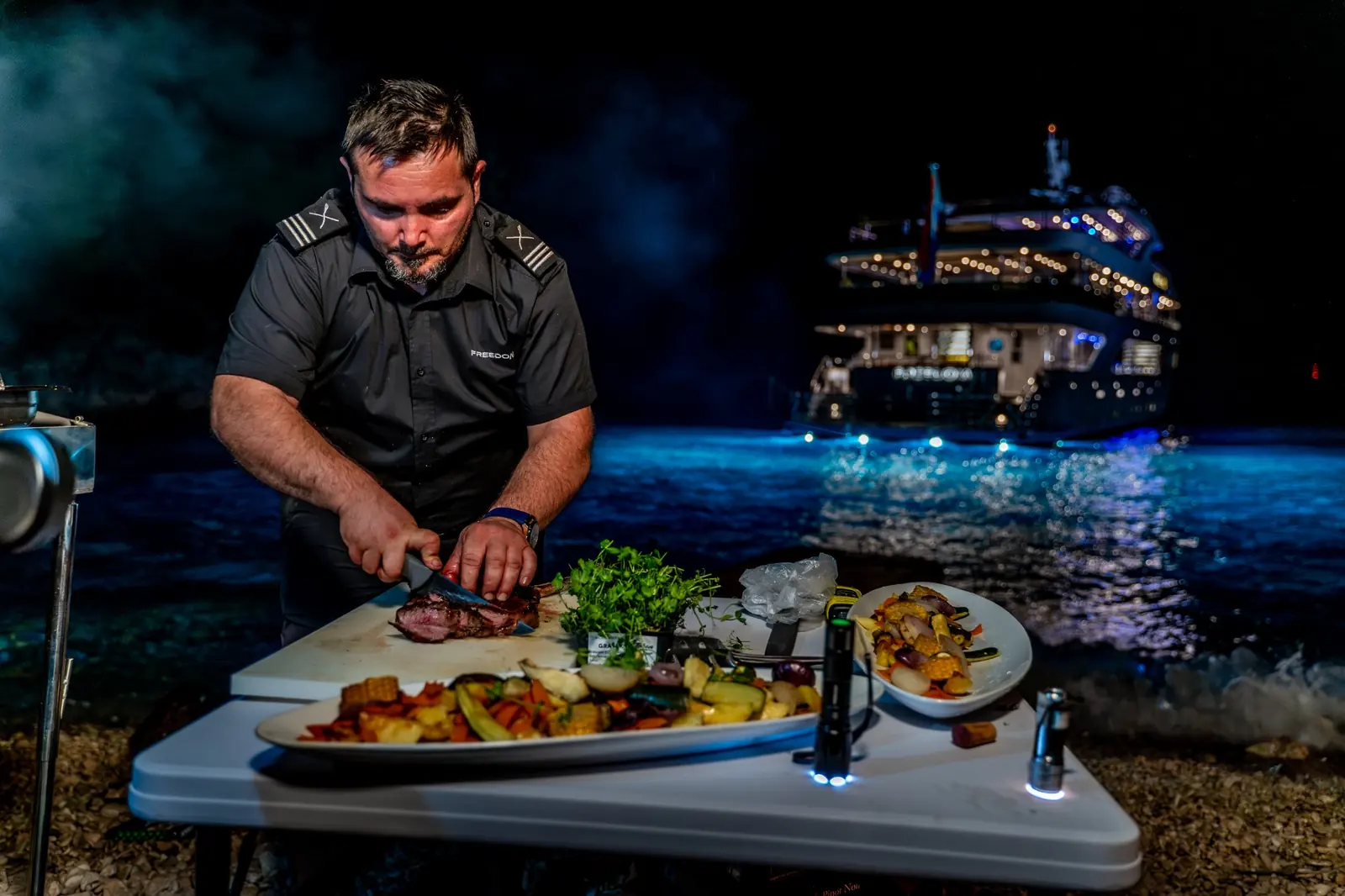
On a skippered charter, an optional steward or stewardess typically prepares breakfast and a light lunch and handles agreed cleaning duties. This is different from hiring a dedicated chef for a broader meal service.
On a crewed yacht, a chef plans menus around your group’s tastes, allergies, and celebrations. The hospitality staff handles the agreed meal service and housekeeping. On larger yachts, a chief steward or stewardess may lead an interior team.
Before a charter, guests fill out a preference form covering food, drinks, activities, and special occasions. As a result, the crew stocks the yacht before you step on board. They plan menus and can provide sample menus.
Crew size and roles vary by yacht. Confirm who is included, which meals are prepared, and what cleaning is provided. Check whether food and drinks are included in the quoted price or paid separately, including through APA where applicable.
What qualifications do you need to skipper a bareboat in Croatia?
To skipper a bareboat in Croatia, you need a boating certificate recognized by Croatia for your yacht’s size. You also need a radio certificate if the yacht carries a VHF (very high frequency) radio station.
Croatia’s Ministry of the Sea, Transport and Infrastructure publishes an official table of recognized foreign boating certificates.
It includes certificates from the Royal Yachting Association (RYA) in the UK. It also lists the International Certificate of Competency (ICC). American Sailing Association (ASA) and US Sailing certificates appear too. Each entry shows the vessel size and sailing area it covers.
Still, the charter operator makes the final check at handover. Therefore, send copies of your certificates in advance and ask whether they cover the specific yacht. For a longer explanation, see our Croatia sailing license guide.
As a guest on a skippered or crewed charter, you do not need these qualifications when a professional captain operates the yacht.
What does each charter option cost?
A fair comparison between a bareboat and a crewed charter in Croatia uses the same dates, yacht size, and guest count. Then it separates four things: the charter rate, running expenses, optional extras, and the refundable deposit.
A refundable security deposit is held separately from expected holiday spending. APA funds real operating expenses and belongs in the initial planning budget; after reconciliation, only the unused balance is returned. Count the covered expenses once, rather than adding both APA and those expenses.
For typical rates by yacht type, see our Croatia yacht charter cost guide.
- Charter rate
Confirm what the fee includes and whether applicable VAT or other taxes are additional. - Running expenses
Allow for the agreed food, drinks, fuel, berths and other operating costs. If APA applies, count the expenses it funds once. - Optional extras
Budget for the extras you choose and any discretionary crew gratuity. - Refundable deposit
Keep this separate from holiday spending, but include it in the funds you need available.
What hidden costs come with a bareboat?
The bareboat rate covers the yacht, but other costs appear during the week.
Operators charge some or all of these separately:
- Fuel for the engine and the dinghy outboard
- Marina berths, mooring buoys and national park tickets
- Tourist tax, charged per person
- Final cleaning, bed linen and towels
- Extras such as paddleboards or an outboard engine
- Skipper and optional steward or stewardess fees, plus their meals, if you hire crew
In addition, your group pays for all food and drinks. Ask the operator for a full list of mandatory extras before you compare prices.
So the bareboat rate is only the starting point of your real budget.
Insurance and security deposits
On a bareboat charter, you pay a refundable security deposit at check-in and get it back if the yacht is returned undamaged. Operators often sell an optional damage waiver, too. It reduces how much of the deposit you could lose.
On a crewed charter, the charter fee includes insurance for the yacht and crew. Any security deposit depends on the yacht’s contract. CKIM Group’s quote template lists it as a separate line, apart from the rate. Either way, read the insurance section of the contract before you sign. Travel insurance for your group is a separate matter.
How does APA work on a crewed yacht?
APA stands for Advance Provisioning Allowance, an account the captain uses to pay agreed running costs during the charter. It applies to some yachts; others use meal packages, included allowances or separately charged expenses. Confirm the arrangement in your quote and contract.
For motor yachts, the APA can range from 30 to 45% of the base charter fee. Please remember this is a downpayment towards the operating expenses.
The captain keeps receipts for every purchase. At the end of the week, you receive a full report. Any unused amount comes back to you. If spending runs over, you settle the balance before you disembark.
Ask for an estimate that separates the charter rate, APA or other running expenses, applicable taxes, and optional extras. Crew gratuity is discretionary and should be budgeted separately.
Which charter option fits your group?
Start with your group’s sailing experience, budget, and preferred level of onboard service.
Here are three common situations.
Experienced sailors who want the helm
A bareboat makes sense if someone in your group holds a recognized certificate and loves sailing. You set the pace, and nobody else is on board. Just remember that the skipper works every day, even at anchor.
Alternatively, experienced sailors sometimes book a crewed yacht for a change. They still take the helm when the captain agrees, but they skip the cooking and the washing up.
A group of eight friends
For eight friends, both options work, but the trade-offs differ.
On a bareboat charter, an experienced member of the group is responsible for operating the yacht, and everyone shares meals and housekeeping. On a skippered charter, the captain handles the yacht; adding a steward or stewardess can reduce meal preparation and cleaning duties. For eight guests, confirm sleeping capacity and any accommodation needed for hired crew.
On a crewed yacht, confirm the crew accommodation and the guest cabins available for your group. Also check the agreed meal service.
Compare the total budget and the number of available guest cabins with the work your group wants to take on.
Families and couples who want more onboard support
A crewed charter suits families and couples who want sailing, meals, and housekeeping handled for them. A skippered charter with a steward or stewardess can also work well if breakfast, a light lunch, and agreed cleaning provide enough support.
Discuss your children’s ages and needs before booking, and confirm the crew’s duties. Parents should not assume that crew service includes childcare.
With young children, a crewed catamaran is a popular choice for its space and stability. See our guide to choosing the best yacht type for more detail.

How do you plan a crewed charter with CKIM Group?
Planning a crewed charter with CKIM Group takes three simple steps.
- Share your plans. Tell us your dates, group size, and how involved you want to be. Also mention diets, celebrations, and preferred islands.
- Review yachts and crews. Then we suggest crewed catamarans, motor yachts, or luxury crewed yachts that match your group.
- Agree the details. After that, we confirm the proposed route, the expense arrangements, and exactly what the crew will handle.
Common questions about charter types
These short answers cover the questions travelers ask before choosing a charter type.
No. Bareboat means the yacht comes without a paid crew. Your own group sails it together, with one or two people acting as skipper.
Yes. Experienced sailors may choose a crewed yacht to reduce onboard responsibilities. With the captain’s agreement, they can still help sail.
Usually not. A skipper operates the yacht. You can sometimes hire a steward or stewardess to prepare breakfast and a light lunch and handle agreed cleaning. Confirm each crew member’s duties before booking.
Accommodation varies by yacht. Confirm where the crew will sleep and how many cabins remain available for your group.
When a yacht uses APA, it is paid in addition to the charter rate to fund agreed expenses such as food, drinks, fuel and berths. Other yachts use meal packages, included allowances or separately charged expenses. Check your quote and contract.
Bareboat charters generally have lower base rates, but the total depends on the yacht, dates, and service level. Compare fuel, marinas, food, crew fees, and other extras for each option.
Crewed yachts may offer one-way routes, such as Split to Dubrovnik, subject to availability and agreement. Bareboat and skippered charters usually return to their base; ask about any one-way options, permitted routes and additional fees.
A refundable security deposit is held separately from holiday spending and returned subject to the contract’s terms. Include it in your available funds, but do not count it as an expense unless deductions apply.
Find the right charter for your group
Share your dates, guest count, approximate total budget and preferences. CKIM Group will help identify suitable crewed yacht options and explain the service and expense arrangements.
Charter terms like VAT, APA, bareboat, tender, or gulet explained in plain English in our charter terms glossary.
Curious about which yachts are available for your next journey? Let our team guide you or dive in and discover the options for yourself.