
Electric Catamaran Charters in Croatia
Explore electric catamaran charters in Croatia, compare hybrid and solar systems, and learn what to ask about MIDORI SUNREEF 70 ECO.
An electric catamaran can offer quieter cruising and less propulsion noise during a Croatia charter. For guests who enjoy conversation on deck or peaceful time at anchor, the benefit depends on when the yacht can operate without a combustion engine or generator running.
Electric and hybrid yachts use different combinations of motors, batteries and charging systems. This guide explains those differences, their effect on life aboard and the questions to ask before booking. Croatia’s MIDORI SUNREEF 70 ECO provides a sailing-catamaran example.
Explore Croatia power catamaran charter options
What is an electric catamaran?
An electric catamaran uses electric motors to turn its propellers. Batteries can supply those motors, while a generator may also supply electricity in a hybrid system. The propulsion label tells you how the propellers are driven; it does not identify every energy source aboard.
Sailing and electric describe different features. An electric sailing catamaran can travel under sail and use its electric motors when needed. An electric power catamaran has no sailing rig and relies on its motor propulsion for cruising.
However, solar panels alone do not make a yacht an electric-propulsion vessel. For example, a conventional diesel catamaran may use solar electricity for appliances while diesel engines still drive the propellers.
Electric and hybrid systems compared
A series hybrid, sometimes called a serial hybrid, uses electric motors for propulsion and a combustion-powered generator to produce electricity. In a parallel hybrid, a combustion engine can also drive the propeller mechanically. The installed arrangement determines the available operating modes.
| Arrangement | What drives the propellers | Main question for guests |
|---|---|---|
| Battery-electric propulsion | Electric motors using stored energy, without combustion assistance in that mode | How long can the yacht sustain the intended speed and onboard demand? |
| Series hybrid | Electric motors; a generator can supply electrical energy | When does the generator run, and what noise or fuel use should guests expect? |
| Parallel hybrid | Electric motors, a combustion engine, or both, depending on the system | Which modes can the crew use on the proposed itinerary? |
A separate generator may serve onboard appliances without supplying the propulsion system. Confirm what it powers before describing a yacht as hybrid. Electric propulsion does not, by itself, establish fuel-free or emission-free operation for the whole charter.
Searching for the ideal yacht?
Explore more yachts or let us recommend the perfect fit.
How do electric catamarans recharge?
Solar panels
Solar panels can help charge batteries and supply onboard electricity. Their contribution depends on panel capacity, sunlight, shading and energy demand. Sunreef and Fountaine Pajot offer designs with solar installations, but a builder’s available technology is not proof of what is fitted to a particular charter yacht.
Hydrogeneration under sail
Some electric sailing catamarans can recharge while sailing. Water turns a compatible propeller, allowing the connected motor to act as a generator. This is called hydrogeneration. Output depends on equipment, sailing speed and conditions, so it should not be treated as a guaranteed source for every passage.
Shore power and generators
Suitable shore power can recharge batteries in port. The yacht’s charger, connection and the marina’s electrical capacity determine what is practical. However, a berth with electricity does not automatically provide rapid charging.
Where fitted and connected to the relevant system, an onboard generator can produce electricity when batteries or renewable sources cannot meet demand. As a result, some hybrid yachts can operate without relying on marina charging stops. The captain plans charging and generator use around the yacht and itinerary.
Croatia’s season also affects solar opportunities. DHMZ’s historical Hvar data records about 372 sunshine hours in July and 205 in October. These are monthly averages, not charter-week forecasts or measures of the energy a yacht will generate.
See DHMZ’s historical climate data for Hvar
How far can an electric catamaran cruise on batteries?
There is no single battery-only range for catamarans. Usable battery capacity, speed, sea conditions and electricity consumption all affect endurance. In addition, air conditioning, cooking and other onboard systems may draw on the same energy supply, depending on the installation.
Therefore, request operating figures for a realistic speed and guest routine. Distinguish battery-only performance from generator-assisted range: a long passage completed with a generator running is not evidence of an equally long battery-only passage.
The same distinction applies at anchor. A yacht may offer quiet periods using batteries, but the length of those periods depends on its energy use and charging plan. Ask specifically about evenings, overnight air conditioning and when the generator normally runs.
MIDORI SUNREEF 70 ECO in Croatia
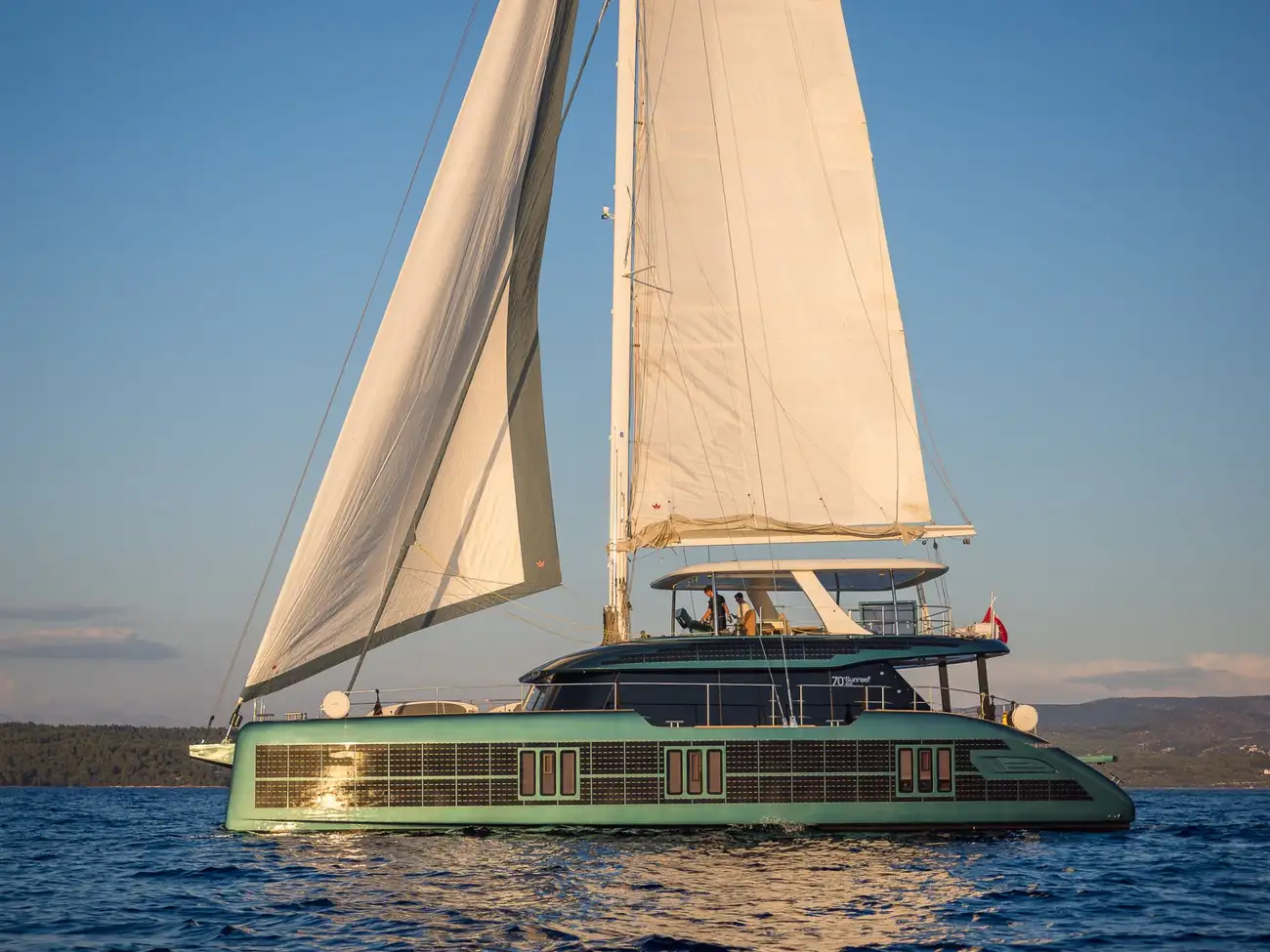
Croatia’s MIDORI SUNREEF 70 ECO is a Sunreef 70 Eco sailing catamaran built in 2026, with three guest cabins for up to six guests. She is a different yacht from the catamaran named MIDORI in the Bahamas.
The current MCYC profile lists electric propulsion, integrated solar panels and four crew members. Its sample menu describes Japanese and Mediterranean influences. Compare these features alongside the accommodation and service your group needs.
By contrast, groups requiring four guest cabins should compare another yacht. Review the actual bed configuration and cabin access if children, friends sharing rooms or guests with mobility needs are traveling.
Electric branding does not establish MIDORI’s battery-only range, charging time or generator-free endurance. Those operating details need yacht-specific information from her representative or captain. Crew assignments, equipment and availability should also be reconfirmed for the requested dates.
Who should consider an electric or hybrid charter?
Choose this option if quieter operation matters to your group and the yacht’s documented operating routine suits your plans. Guests interested in modern yacht technology may also enjoy learning how the crew balances sailing, solar generation, batteries and fuel-powered support.
Compare another yacht if the available cabin layout, budget or cruising arrangements are a poor fit. If generator-free nights are essential, resolve that requirement before booking. A suitable conventional sailing catamaran can still offer quiet time under sail; assess the whole experience rather than the propulsion label alone.
Likewise, deck space and service deserve the same attention as energy systems. Look at shaded seating, dining arrangements, steps between levels and access to the water. Discuss meals, allergies and dietary requirements with your advisor, then record guest details in the Preference Form.
Explore Croatia catamaran charter choices
Compare the details that affect your charter
| Feature | What to compare |
|---|---|
| Propulsion and energy | How motors, batteries and any engines or generators work together |
| Quiet periods | Expected generator use while cruising, dining and sleeping |
| Charging | Usable battery capacity, charging methods and practical itinerary requirements |
| Accommodation and service | Guest cabins, bed arrangements, access and crew responsibilities |
| Total budget | Base fee, taxes, APA and other quoted charges |
Electric, hybrid and diesel catamarans: pros and cons
For this comparison, conventional propulsion means a diesel engine mechanically driving a propeller. Battery-electric describes an operating mode; a hybrid yacht may offer that mode too. Compare similar yachts and realistic operating routines rather than treating every electric, hybrid or diesel catamaran as alike.
On smaller screens, swipe sideways to compare the three propulsion options.
Cruising, noise and energy supply
| What matters | Battery-electric operation | Hybrid propulsion | Conventional diesel propulsion |
|---|---|---|---|
| Noise and vibration | Lower propulsion noise during battery-only operation; other machinery and water still make sound. | Quiet battery-powered periods are possible; an engine or generator adds noise when running. | Combustion noise and vibration while motoring; sound insulation and installation affect comfort. |
| Range and energy | Battery-only endurance depends on speed, usable capacity and onboard demand. | Fuel-powered support can extend operation beyond battery-only endurance; solar alone is not a range guarantee. | Range depends on fuel capacity, speed and conditions; propulsion does not require shore charging. |
| Charging or refuelling | Requires a workable charging plan using the sources fitted aboard. | Can combine charging sources with fuel; daily marina charging is not automatically necessary. | Requires fuel and access to suitable refuelling facilities; onboard electricity arrangements vary. |
Emissions, upkeep and charter costs
| What matters | Battery-electric operation | Hybrid propulsion | Conventional diesel propulsion |
|---|---|---|---|
| Local exhaust emissions | No exhaust from electric motors during battery-only operation; generators or other combustion equipment may still run. | Local emissions occur when combustion-powered equipment operates; reductions depend on actual use. | Exhaust emissions occur while engines or generators run. Sailing with engines off is a separate operating mode. |
| Maintenance and support | Electric motors may need less routine servicing than diesel engines; batteries, cooling and controls still need maintenance. | Both electrical and combustion systems need maintenance, with added integration to manage. | Requires routine engine and fuel-system servicing; service availability must be checked for the yacht and route. |
| Charter costs | No automatic saving: yacht size, crew, dates and charging costs affect the quote. | Fuel use and savings depend on operation; do not assume a lower weekly fee or APA. | Compare the full quote and realistic fuel use. Propulsion type alone does not determine the charter price. |
Which propulsion option fits your plans?
Choose battery-electric operation if quieter passages matter and the documented endurance suits your plans. Consider hybrid propulsion if you want battery-powered periods with fuel-powered support when needed. Compare conventional diesel propulsion if you prefer a fuel-based cruising routine without propulsion-charging stops. In every case, cabin layout, crew service and the actual itinerary remain essential.
For a sailing catamaran, time under sail is a separate benefit available with conventional or electric auxiliary propulsion. None of these labels guarantees silent nights, fuel savings or a particular charter cost. The manufacturer’s explanation of hybrid propulsion illustrates how electric motors and a generator can work together; it does not establish the equipment installed on MIDORI.
Questions to ask before booking
- What is the yacht’s propulsion arrangement, and what does each generator power?
- What battery-only cruising performance is supported at the intended speed and onboard electricity demand?
- When does the generator normally run, including at anchor and overnight?
- Does the proposed route require shore charging, and which ports can provide a suitable connection?
- How do the cabins, crew service and current equipment meet our group’s needs?
- What does the quote include, and how are fuel, shore electricity and other operating expenses charged?
The Advance Provisioning Allowance, or APA, is an advance toward expenses covered by the charter agreement. Ask how spending is recorded and how any balance is settled. However, electric propulsion does not automatically mean lower charter costs. Rates and inclusions may change; request a current written proposal.
Read our Croatia catamaran charter cost guide
Electric catamaran FAQs
No. Electric motors may operate alongside combustion-powered generators or engines. Solar panels can contribute electricity without meeting every onboard need. Ask what powers propulsion and appliances, and when fuel-powered equipment is expected to run during the proposed charter.
Battery-only range depends on usable battery capacity, speed, sea conditions and onboard electricity demand. Request figures for the particular yacht and expected operating conditions. Keep battery-only performance separate from the distance achievable with a generator supplying additional electricity.
Some yachts can support air conditioning from batteries for a period, but this is not universal. Ask how overnight cooling works, what conditions affect endurance and when recharging is needed. Generator-free nights should be confirmed with the yacht’s representative if they are essential.
Not necessarily. Depending on the installation, a yacht may recharge through solar panels, hydrogeneration, shore power or a generator. Daily marina visits are not a universal requirement. The captain should assess charging needs against the proposed route and onboard electricity demand.
The yacht, dates, duration and charter terms determine the price. Request a proposal separating the base fee, applicable taxes, APA and other charges. Compare quotes for the same group and dates rather than assuming that electric propulsion makes a charter cheaper.
This guide refers to MIDORI SUNREEF 70 ECO, the Croatia-based sailing catamaran with three guest cabins for up to six guests. She is distinct from the catamaran named MIDORI in the Bahamas. Confirm the full yacht identity when comparing profiles and proposals.
Find a catamaran that fits your Croatia plans
Tell My Croatia Yacht Charter your dates, guest numbers, preferred route and onboard priorities. If quieter cruising or generator-free periods matter, include those expectations in your inquiry. Your Yacht Charter Advisor can compare suitable yachts and request the operating details needed to make an informed choice.
Charter terms like VAT, APA, bareboat, tender, or gulet explained in plain English in our charter terms glossary.
Curious about which yachts are available for your next journey? Let our team guide you or dive in and discover the options for yourself.